

Business rarely changes in a predictable way. It’s not a straight line. New technologies reshape old industries, customers rewrite the rules of loyalty on the fly, and hiring trends swing from working from anywhere to “be here on Tuesday morning.”
One solid guess for 2026 is that the strongest organizations won’t just react to whatever is coming on the horizon; they’ll be more disciplined, anticipating what’s next, and seizing opportunities as they arise. That’s where the McIntire School of Commerce is focusing its efforts: aligning curriculum, experiential learning, and community engagement to give students the opportunity to be prepared to meet the market where it is and wherever it’s going.
Across McIntire, faculty point to the same underlying advantage: The future belongs to people who can connect dots between data and decisions, trust and technology, ethics and execution. And the School’s goal is more than superficial trend awareness; it’s supporting authentic leadership readiness.
Data, AI, and Life Sciences Converge in the Biotech Industry

Nikki Hastings
If you want a clear signal of where business is headed, start where the stakes are highest: human health. It’s clear to see right here in Charlottesville, where a regional boom of biotech is rapidly accelerating business and educational opportunities. Professor Nikki Hastings, Shumway Business Health Science Fellow and M.S. in Commerce Biotechnology Track Director, describes a landscape where AI has moved from merely “interesting” to essential.
“The most significant trend shaping digital health and biotechnology is the increasing integration of advanced data analytics and artificial intelligence across the life sciences value chain,” Hastings says. “AI-enabled drug discovery, digital biomarkers, real-world evidence generation, and decentralized clinical trials are no longer peripheral innovations but core components of product development and commercialization strategies.”
Hastings also notes that the rules around the industry are shifting with the tools. “Regulatory frameworks, reimbursement models, and investment theses are evolving to reflect the growing role of software, data infrastructure, and platform technologies within traditionally biologic and therapeutic companies,” she says.
McIntire’s response, Hastings explains, is to teach about that intersection: the main thrust of the M.S. in Commerce–Biotech Track, which is “intentionally structured to address this convergence,” she says. “Rather than treating digital health and biotechnology as distinct domains, the curriculum emphasizes their intersection, examining how scientific innovation, data-driven technologies, regulatory strategy, and business execution co-evolve.”
And the courses are built around both theory and practice as students engage with real-world case studies drawn from digitally enabled biotech and health-technology companies, including early-stage ventures navigating “regulatory, clinical, and commercial decision-making.” In short, McIntire is training life sciences business leaders who can bridge lab potential to market reality.
The Workforce Settles Into “Flexibility 2.0,” with Skills Taking Center Stage
If the last few years were a giant experiment about where work happens, 2026 looks like it may be the era when it finally stabilizes. Dorothy Leidner, Leslie H. Goldberg Jefferson Scholars Foundation Eminent Professor of Business & AI Ethics, sees the emergence of structured hybrid workplace models, with less chaos and more intentional design.

Dorothy Leidner
“Some big organizations really managed to put in place hybrid models that are working pretty well,” says Leidner, referencing plans that have people in office mid-week and working remotely Mondays and Fridays. “The days of being permanently remote for most jobs are going to be gone, but the hybrid needs some structure to it,” she says. “If everybody’s coming and going when they want and where they want, that doesn’t work so well.”
In a tight market, offering a partially hybrid structure can become an advantage for employers looking to attract top talent. “Where very good employees have options and one company is five days a week in office and another has more flexibility, all else being equal, I think they take the hybrid one,” Leidner says. “It’s a strategic advantage to have that and to do it well.”
Hiring trends are also leaning toward demonstrable, role-ready abilities. “It really seems like companies are looking for more specific skills,” Leidner says, adding, “I hear a lot that companies want people who are familiar with not just agentic AI, but multi-agentic AI.” McIntire empowers its students with the kind of technical fluency that employers notice, but also what they often can’t easily see on a résumé: that Comm School students are high-level communicators, collaborators, and critical thinkers.
Marketing Personalization, Privacy, and the New Standard of Trust
If AI is changing what businesses can do, consumers are changing what businesses must be. Professor Nicole Montgomery points to two forces shaping marketing: hyper-personalization and a rising demand for authenticity, especially among younger audiences.
 “Hyper-personalization is one of the most powerful ways AI is reshaping marketing for 2026 and beyond,” Montgomery says. “AI enables marketers to analyze vast amounts of data in real time to deliver the right message, product, or experience at exactly the right moment.”
In her teaching, that capability comes with responsibility. Students explore how AI powers “personalized recommendations, adaptive websites, targeted advertising,” and more, Montgomery says, “while also confronting the privacy and trust challenges that come with these capabilities.”
Meanwhile, consumers increasingly reward consistency over slogans. “For younger consumers, authenticity and community are essential,” Montgomery says. “Brands earn trust through transparency, values-driven action, and genuine engagement, not performative marketing.” She points to Patagonia as a case where values are visible in behavior, not just lip service messaging, then asks students to bring that lesson into the digital world, where credibility is earned by participation, listening, and follow-through.
AI Goes Operational and Governance Becomes a Leadership Competency
Professor Reza Mousavi frames 2026 as a year when AI moves past isolated tasks into real workflows. His work exploring how generative AI recommends businesses led him to build tools that break down complex evaluation into separate components.
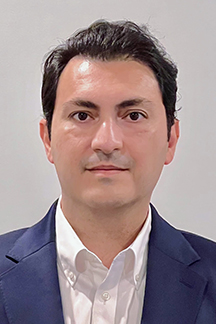
Reza Mousavi
“Each LLM [large language model] or AI agent has its own task, has its own prompt, and it is connected to the right tool to get data from some other external sources,” Mousavi says. But he sees the next steps coming fast and fewer steps standing between the user and the finished product. “Everything is going to be done within the prompt, and the AI model itself is going to create background agents,” he says. “Meaning that you just tell it your objectives and constraints.”
That’s why McIntire coursework emphasizes practical applications to solve actual business problems. Mousavi notes that in his M.S. in Business Analytics Program Data Analytics III course, as well as in his McIntire undergraduate course on the foundations of machine learning and AI, students are required “to build an AI agent with a real use case,” tying technical execution to practical outcomes.
Then there’s governance, an issue which is often discussed but rarely put into effect. “There are lots of people using AI,” Mousavi says. “And unfortunately, I have never seen a universal, relevant, and really applicable governance for these types of practices.” The point isn’t panic; it’s preparedness. “In my courses, we do cover how you can check if your AI models are behaving the way they’re supposed to,” he says. In 2026, that vigilance and know-how are leadership requirements.


